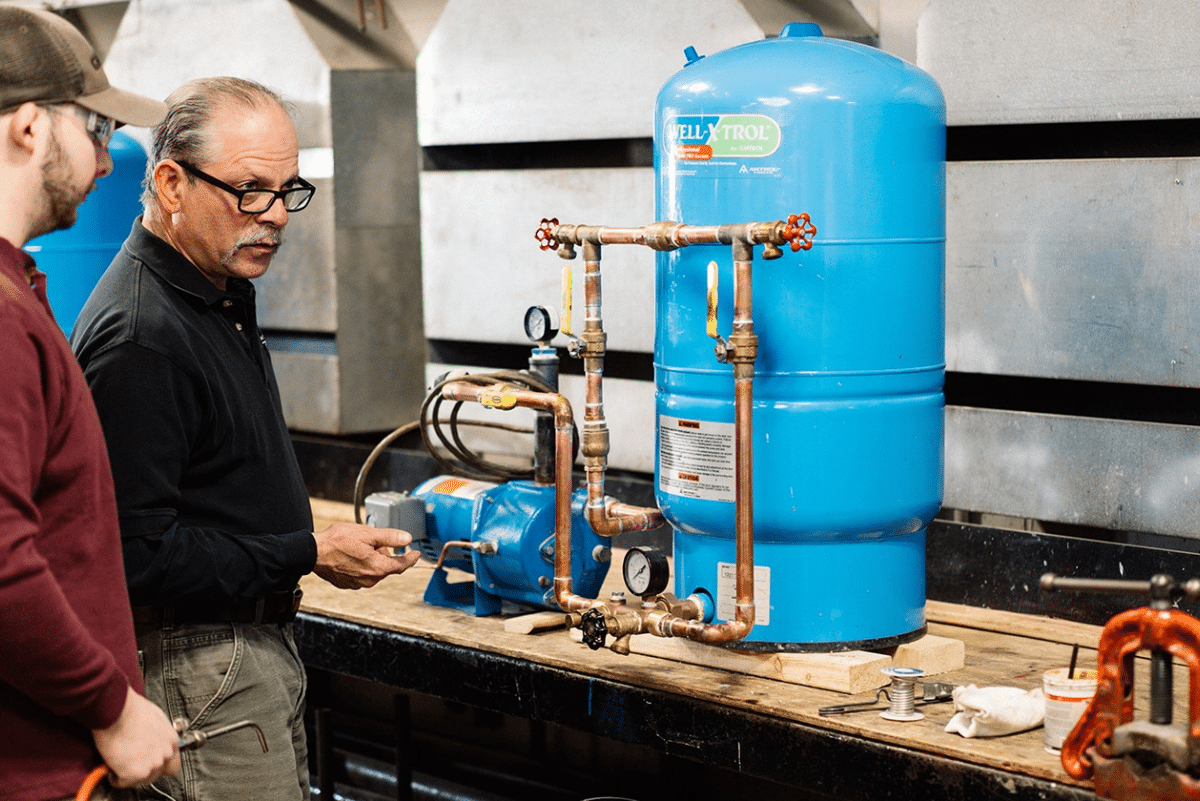
When an Isley Plumbing technician arrives at your home — rest assured they are trained, knowledgeable and experienced. Our plumbers have been offering quality service for over 100 years, and we’ve always focused on education and hands-on experience.
A Focus on Balanced Education Includes:
- Apprenticeship Programs: The most critical step is enrolling in an apprenticeship, which combines paid on-the-job training with classroom instruction.
- Technical Knowledge:
- Math and Science: Strong foundational skills in algebra, geometry, and physics are necessary for designing systems and calculating pipe measurements.
- Codes and Regulations: In-depth knowledge of local, state, and national plumbing codes is required for safety and legality.
- Systems and Materials: Education on pipe system design, welding, and working with hazardous materials (e.g., natural gas) is essential.
- Vocational/Technical Schooling: Before or during an apprenticeship, taking courses at a technical school can provide a head start in understanding tools and basic installations.
- Safety Certification: Training in safety protocols is a top priority, often including OSHA training.
- Continuing Education: Licensed plumbers must stay updated with regular continuing education classes on new regulations and technologies.