Water treatment in Indianapolis starts with a clear question, not an assumption that every home needs the same filter or softener. A taste change, a concern about scale, a new appliance, or a desire to improve a particular use of water can all lead to a useful service conversation. They do not, by themselves, identify a contaminant, prove that water is unsafe, or show which equipment belongs in a specific property.
Before contacting a professional, a homeowner can make a short record of the goal, the affected fixtures, and the information already available. That preparation keeps the conversation focused on the actual household and helps avoid turning a general online recommendation into a property-specific conclusion.
Begin with the household's actual goal
Write one sentence that describes what the household wants to understand. The goal might concern water used for drinking, a taste or odor noticed at one fixture, visible residue on fixtures, a question about an existing treatment system, or planning for a remodel or appliance. Keep the wording factual. "We want to understand a taste change at the kitchen tap" is more useful than declaring the cause or selecting a treatment method before a review.
It also helps to note where the concern appears. Is it limited to one tap, present at several fixtures, tied to hot water, or noticed only after a recent household change? These observations give context, but they are not a water test. Do not use a single observation to claim that a treatment system will remove a particular substance or solve every condition in the home.
Keep point-of-use and whole-home questions separate
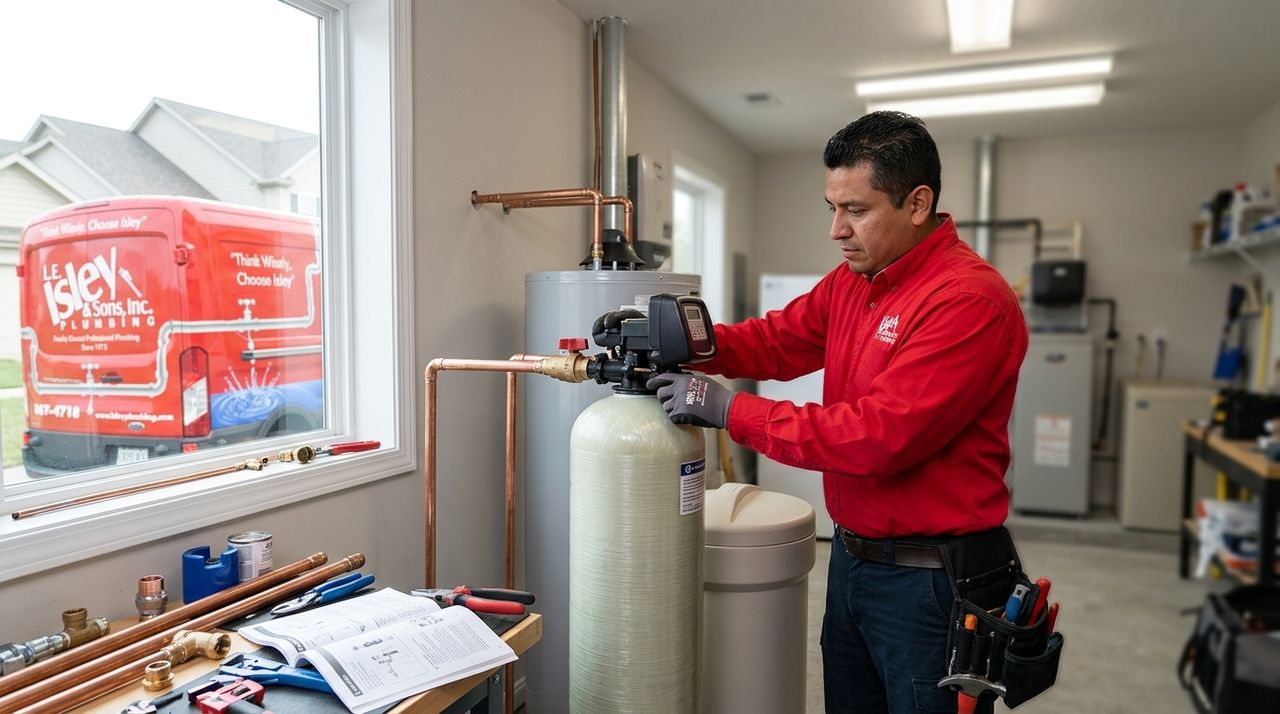
Water-treatment conversations can involve different scopes. A point-of-use drinking-water setup and a whole-home treatment system are not interchangeable simply because both relate to water. A household should describe the intended use, the fixtures involved, available space, maintenance history, and whether the goal is limited to drinking water or applies more broadly.
The EPA's home water-treatment guide recommends matching equipment to the concern and reviewing relevant product certification information. That is a useful planning principle. It does not establish what Isley Plumbing will recommend for an Indianapolis property, and it should not be read as a guarantee about a particular product or outcome.
When preparing notes, avoid assuming that a drinking-water filter treats a whole-home condition or that a broader treatment system is automatically appropriate for one fixture. The right scope depends on verified information, the household goal, and the installed plumbing.
Gather records without opening equipment
Existing records can make a consultation more efficient. Collect prior invoices, the equipment manual, a visible model label if it can be read safely, and any manufacturer instructions that came with the system. Note the approximate date of the last known service if the household has that information. If there is no record, simply say so.
Do not open a pressurized housing, force a bypass valve, disconnect tubing, remove a cartridge, or alter plumbing to obtain information for a consultation. A system that is wet, leaking, inaccessible, or unfamiliar needs a professional assessment rather than a homeowner inspection. Keep children and pets away from any area where water or equipment creates an access concern.
A useful record may include:
- The household goal in plain language
- The fixture or fixtures involved
- When the condition was first noticed
- Whether it is constant, occasional, or changed after normal use
- Existing equipment paperwork and visible label information
- Prior service dates or a note that they are unknown
- Any safe access limitation around the current equipment
Avoid turning observations into a diagnosis
Cloudiness, taste, odor, residue, or a change in water use can have different explanations. The same observation may be limited to a fixture, a temperature condition, an existing component, or another property-specific factor. A household cannot determine the cause or the appropriate treatment from a generic checklist.
Do not make a water-quality or health conclusion from appearance alone. Do not buy equipment based only on a neighbor's system, a broad regional statement, or a product advertisement. If testing, product documentation, or a professional inspection is relevant, ask how it will be used to evaluate the stated goal.
This careful boundary is especially important when a homeowner is concerned about drinking water. The conversation should distinguish what was observed from what has been verified. It should also distinguish a preference or maintenance question from a claim about safety or contaminants.
Prepare clear questions for a consultation
Bring the written goal and records to the service conversation. Ask which information would help evaluate the existing setup, what scope of treatment is being discussed, and whether the equipment documentation addresses the household's stated concern. Ask what maintenance information should be saved for later, rather than assuming a universal replacement schedule.
Other practical questions include whether the current system has a known service history, whether a fixture-specific concern calls for a different review than a whole-home concern, and what should remain untouched before the assessment. These questions let Isley Plumbing respond to the actual property while avoiding a promise that one option fits every Indianapolis home.
If a proposal is offered, ask it to identify the intended purpose, the verified basis for the recommendation, the equipment scope, and the maintenance information the homeowner should retain. A clear written scope is more useful than a generalized claim about water quality or product performance.
Preserve a simple before-and-after record
If the household later receives a professional recommendation or makes an approved change, keep the original goal with the resulting paperwork. Record the date, the scope of the work, the guidance provided for normal use, and any manufacturer document supplied with the equipment. This does not create a test of the system or a guarantee about future performance. It simply preserves the facts needed for a later service conversation.
When a new observation occurs, write down the fixture, the date, and the normal-use context. Avoid changing settings, bypassing equipment, or repeatedly operating valves to see whether the result changes. A different observation may have a different explanation, and the safest next step depends on the actual plumbing and equipment.
For a rented home or shared household, identify who keeps the records and who should receive service updates. Clear communication prevents a prior note from becoming an unsupported instruction for another person. It also helps ensure that the discussion stays tied to the property, the documented goal, and the current condition rather than a generalized online claim.
Make the next step specific to the home
For water treatment in Indianapolis, the most useful first action is a factual record of the household goal and the equipment already present. Do not modify plumbing or make a treatment decision from a symptom alone. Review current water-treatment service information with Isley Plumbing, bring the safe observations and records, and let the property-specific review determine the appropriate next step.
That approach keeps a treatment discussion grounded in verified information. It also gives the household a better way to compare options without overstating what any system can do.
Keep records current annually.
Have a plumbing question?
Same-day service often available. Four generations of trusted Indiana plumbers.
(317) 565-1225