Few household problems announce themselves as loudly as a water heater that cannot keep up. The shower starts warm, drifts toward lukewarm and finishes cold, and the next person in line gets nothing at all. If you are searching for water heater repair in Indianapolis, that gradual decline is probably what led you here, and understanding it can save both time and frustration.
This guide explains why a heater runs short, what you can check safely and when to call L.E. Isley & Sons Plumbing.
Why a heater runs out of hot water
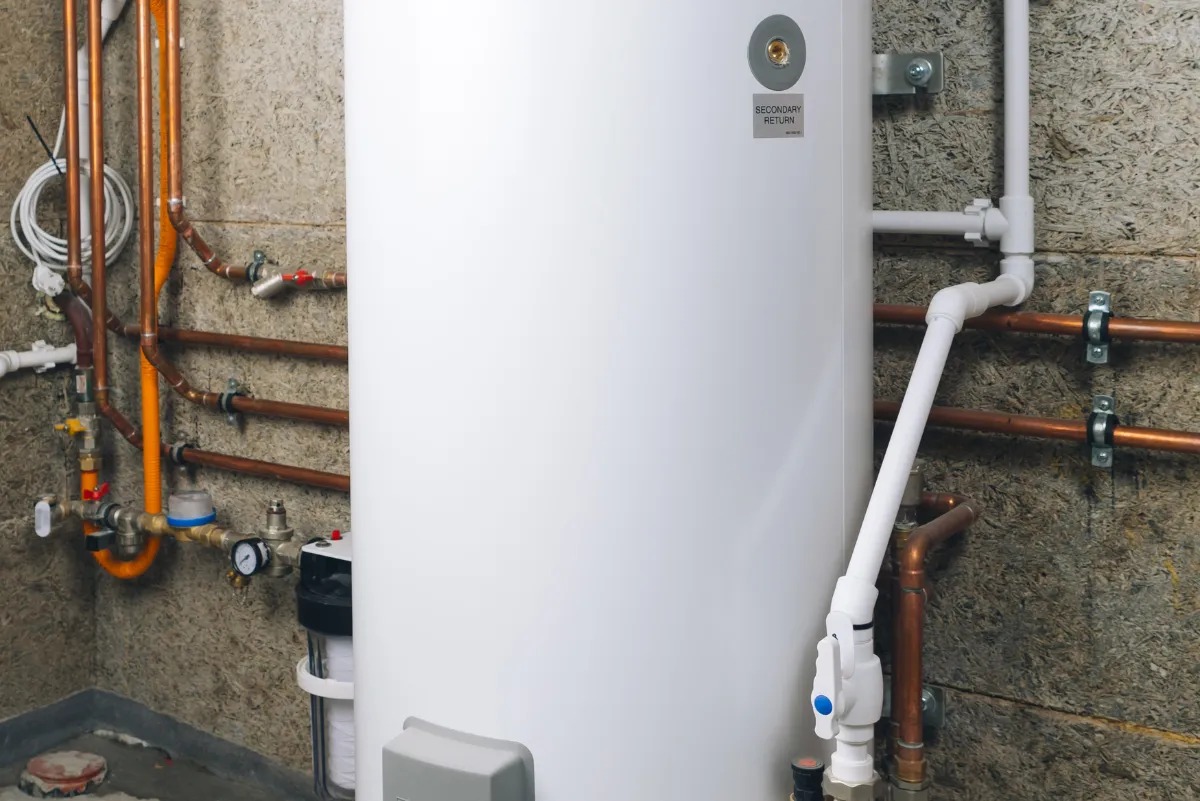
A storage water heater keeps a fixed volume of heated water. Every time you draw from it, cold water enters near the bottom and the burner or heating elements work to bring the tank back to temperature. When the supply of hot water shrinks, one of a few things is usually responsible.
Sediment. Minerals settle at the bottom of the tank and take up space that would otherwise hold hot water. The layer also insulates the water from the heat source, so the unit works harder and heats less.
A failed heating element. Electric tanks have an upper and a lower element. When the lower one fails, only the top of the tank heats, and the hot water runs out quickly.
A faulty thermostat. If it misreads the temperature, heating can stop early.
A broken dip tube. This plastic tube carries incoming cold water to the bottom of the tank. If it cracks, cold water mixes with hot at the top.
Gas tanks add a few more suspects, including a dirty burner, a weak thermocouple or an igniter that fails to light.
Other symptoms and what they point to
- No hot water at all. A tripped breaker, a failed upper element or a gas supply problem.
- Water that is too hot. A thermostat set too high or failing.
- Rumbling or popping. Sediment trapping small pockets of steam.
- Rust-colored water from hot taps only. Corrosion inside the tank.
- Water around the base. A leaking fitting, a relief valve or the tank itself.
- A rotten egg smell from hot water. A reaction involving the anode rod, which a technician can address.
Checks you can safely make
A few observations help a technician and sometimes solve the problem outright.
- Look at the breaker for an electric heater and reset it once if it has tripped
- Confirm the gas valve is open on a gas heater
- Check the thermostat setting on the unit
- Look for water on the floor around the tank
- Notice when the hot water runs out, and how long it takes to recover
Do not remove electrical panels without turning off power at the breaker, and do not work on gas connections. If you smell gas, leave the home and contact your gas utility or emergency services.
Want a technician to look at it? Call L.E. Isley & Sons Plumbing at (317) 565-1225.
Water heater repair in Indianapolis, what the visit includes
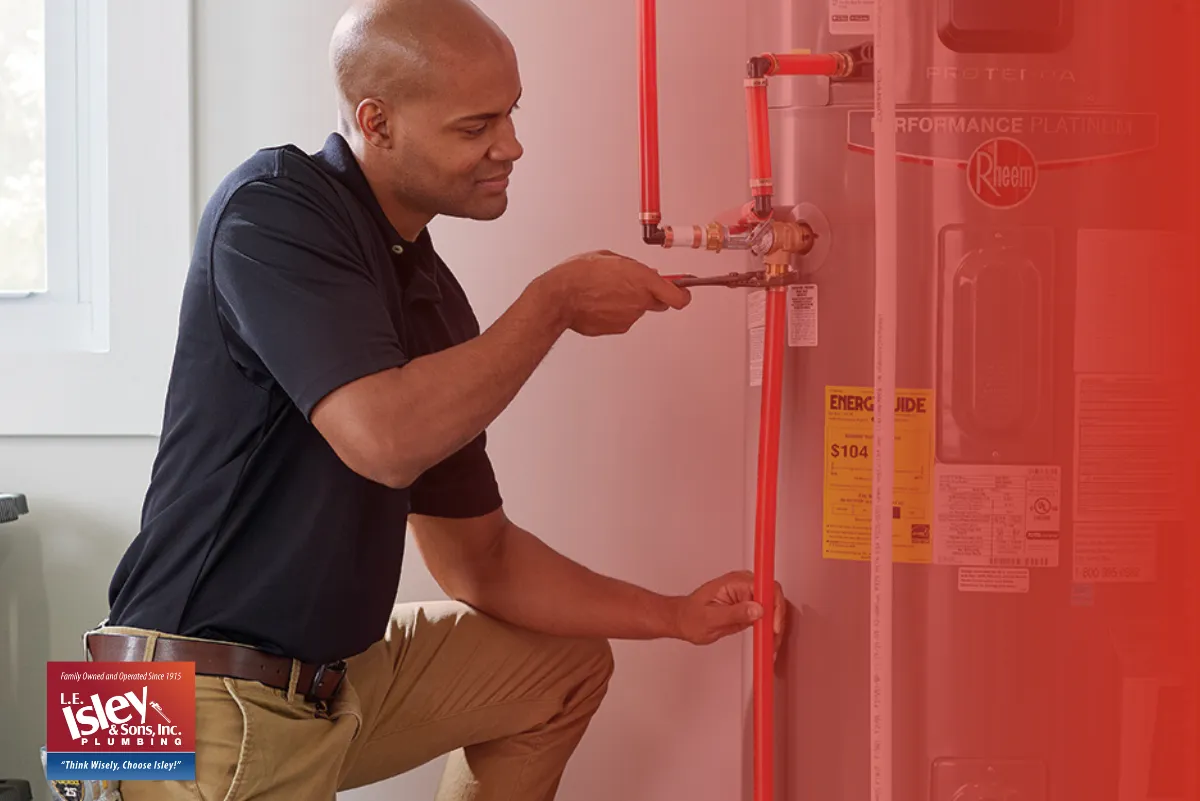
The technician will confirm power or gas supply, test the thermostat and elements or inspect the burner and thermocouple, check the relief valve and dip tube and look at the condition of the tank. If sediment is the problem, flushing the tank may restore capacity. The water heater services page describes the repair, replacement and tankless work L.E. Isley & Sons Plumbing offers.
Repair or replace
A single failed part on a sound tank is usually worth repairing. Elements, thermostats, relief valves and dip tubes are typical examples. A leaking tank, heavy corrosion, repeated failures or a unit that no longer meets your household's needs usually points toward replacement. A technician can read the data plate, inspect the tank and explain how much life is likely left, so the choice is made with real information instead of guesswork.
What the technician is testing
A thorough diagnosis follows the path of energy through the heater, from the supply to the water. On an electric unit, the technician confirms that power reaches the upper thermostat, that the thermostat passes power to the upper element and that the lower thermostat and element complete the heating cycle, using a meter to check that each element has the resistance it should.
On a gas unit, the technician checks the gas supply, the pilot or igniter, the thermocouple and the condition of the burner, and looks at the flue to confirm that exhaust leaves the home properly.
Along the way the relief valve and the tank itself are inspected, because a heater that needs a repair today may also be showing signs of a larger problem.
A scenario, the family of five
Picture a household with a tank that once covered three back-to-back showers and now handles only one. The homeowner assumes the tank is too small. A technician flushes it, which releases a large amount of sediment, and replaces a failed lower element. The tank delivers its original capacity again. The problem was never the size of the tank. It was the condition of the parts inside it.
Keeping the next repair small
Flush the tank on a schedule, ask a technician to check the anode rod and keep the area around the heater clear. If your water is hard, a softener can help protect the heater, and the water softener and treatment page explains how. The ENERGY STAR page on ENERGY STAR product list is a useful reference if replacement is on the table.
Call for water heater repair in Indianapolis
A heater that runs short is trying to tell you something. Call L.E. Isley & Sons Plumbing at (317) 565-1225 and describe what you are seeing.
Have a plumbing question?
Same-day service often available. Four generations of trusted Indiana plumbers.
(317) 565-1225